
INSTITUTE FOR STANDARD AND QUALITY DEVELOPMENT STUDIES


19/08/2026
Children's toys are a product group directly related to the health, safety, and development process of children. Children often come into direct contact with toys using their hands, mouth, and body; at the same time, they may use toys for extended periods under various conditions. Therefore, if a product fails to meet physical/mechanical, chemical, flammability, or other technical safety requirements, the risk of harming children is a critical issue that must be strictly controlled.
From July 1, 2026, product and goods quality management policies in Vietnam will undergo a major shift toward risk-based management. Notably, Circular No. 36/2026/TT-BKHCN dated June 30, 2026, issued by the Ministry of Science and Technology, promulgated the List of products and goods with medium and high risk levels under the management responsibility of the Ministry. The Circular takes effect from July 1, 2026, and classifies children's toys regarding toy safety as high-risk products and goods.
This places higher demands on enterprises manufacturing, importing, and trading children's toys, particularly regarding conformity certification, declaration of conformity, and product quality control prior to market circulation.
According to QCVN 3:2019/BKHCN – National technical regulation on safety of children's toys, a children's toy is understood as any product or material designed or clearly intended for use in play by children under 16 years of age. QCVN 3:2019/BKHCN was issued together with Circular No. 09/2019/TT-BKHCN dated September 30, 2019, by the Ministry of Science and Technology.
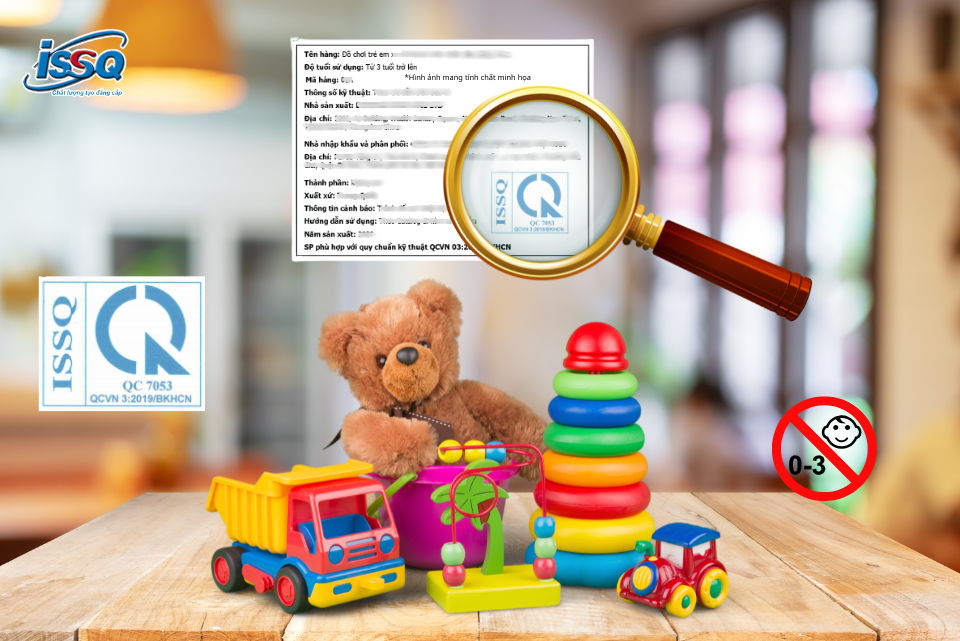
The scope of the regulation is not limited to a specific type of toy but covers various product groups such as toy bicycles, tricycles, pushchairs, dolls, doll accessories, electric toy cars, miniature models, construction toys, animal-shaped toys, building blocks, puzzles, jump ropes, marbles, and many other types of toys within the regulation's scope.
This is a special category of goods because the primary end-users are children – a consumer group that lacks full capacity to recognize and evaluate product hazards.
For example, a toy may appear completely normal on the outside but could still pose hidden risks such as:
Due to these hazards, the law does not rely solely on self-declared quality by businesses but sets mandatory technical requirements through national technical regulations.
In particular, starting July 1, 2026, Circular 36/2026/TT-BKHCN classified children's toys into the List of High-Risk Products and Goods. This is a crucial point that toy manufacturing, importing, and trading enterprises must take special note of.
This classification aligns with the new orientation under Law No. 78/2025/QH15 amending and supplementing several articles of the Law on Product and Goods Quality, effective from January 1, 2026.
Under the amended Law, products and goods are categorized by risk level: low risk, medium risk, and high risk. Risk assessment takes into account the level of impact on health and the environment, supply chain controllability, and relevant warnings.
For high-risk goods, the law mandates stricter regulatory control: products must have an applied standard declared and must be certified by a designated certification body for compliance with the corresponding national technical regulation.
Thus, classifying children's toys as high-risk does not mean that all toys are dangerous. The purpose of this classification is to identify toys as a product group requiring stringent pre-market control due to potential consequences for children if product safety is not guaranteed.
QCVN 3:2019/BKHCN is the National Technical Regulation on Safety of Children's Toys, promulgated alongside Circular 09/2019/TT-BKHCN.
The regulation specifies safety requirements, test methods, and quality management requirements for children's toys manufactured domestically, imported, and circulated on the market.
Key safety requirement categories in QCVN 3:2019/BKHCN include:
First, physical and mechanical safety.
Products must undergo testing for mechanical properties, structure, load capacity, and potential hazards that could cause injury to children during use.
Second, flammability safety.
Certain materials and toy products must meet specific flammability requirements under technical rules.
Third, chemical factors.
The regulation sets limits on specific elements and substances that may affect children's health, including requirements related to phthalates and other substances depending on the material type.
Fourth, material requirements.
Depending on the toy type, constituent materials may need to be evaluated for relevant parameters such as pH, formaldehyde release from specific materials, aromatic amines, and other chemical indicators.
A critical requirement is that toys within the scope of QCVN 3:2019/BKHCN must undergo declaration of conformity, bear the CR conformity mark, and be labeled according to regulations prior to market placement.
Under new provisions effective July 1, 2026, for children's toys on the high-risk list, declaration of conformity is performed based on conformity certification results provided by a designated certification body; imported goods must simultaneously undergo state quality inspection as prescribed.
QCVN 3:2019/BKHCN conformity certification is not merely an administrative procedure. For businesses, it serves as a risk management tool and enhances product trustworthiness.
3.1. Compliance with legal requirements
The primary benefit is enabling enterprises to correctly fulfill mandatory quality management requirements for applicable products.
Particularly from July 1, 2026, children's toys are categorized as high-risk goods. Therefore, businesses need to proactively review their products, HS codes, QCVN 3:2019/BKHCN scope, and corresponding certification demands.
3.2. Controlling hazards affecting children
The certification process—linked with testing and conformity assessment—helps enterprises identify physical, mechanical, flammability, and chemical risks in their products.
This is particularly valuable for toys, as the end users are children—a vulnerable group requiring heightened protection.
3.3. Increasing consumer confidence
A certified product displaying the CR mark and meeting labeling requirements provides consumers with clear proof that the product has been verified against technical standards.
For businesses, this builds a brand image responsible for product safety and quality.
3.4. Supporting stable quality control
Especially under conformity assessment schemes applied to manufacturing, enterprises focus not only on individual samples but also on the manufacturing process itself.
This helps companies shift from a "final product inspection" mindset to "in-process quality control."
3.5. Reducing non-compliance risks and commercial losses
Non-compliant toys can lead to customer complaints, product recalls, brand damage, or administrative penalties.
Proactive certification, testing, and documentation control help businesses minimize these risks and operate more confidently.
Since children's toys belong to the high-risk product group, businesses must carefully choose a legal certification body compliant with regulatory demands.
According to the list attached to Circular 36/2026/TT-BKHCN, children's toys falling under QCVN 3:2019/BKHCN must complete conformity declaration based on results from a designated certification body. Conformity assessment schemes follow Scheme 5 and Scheme 7 under Circular 14/2026/TT-BKHCN.
Basically, enterprises can proceed through the following steps:
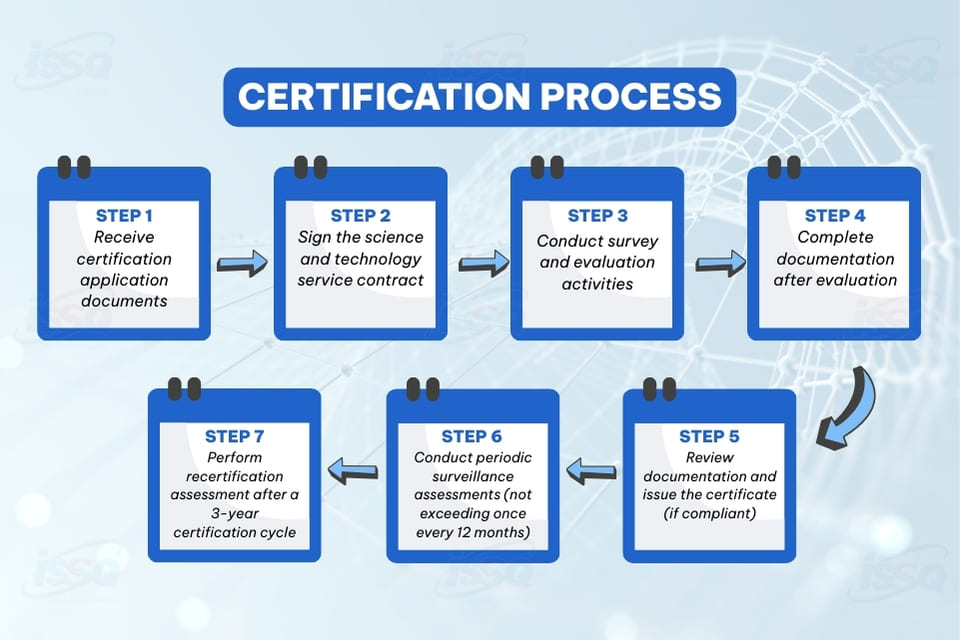
The inclusion of children's toys in the List of High-Risk Products and Goods starting July 1, 2026, represents a significant update in Vietnam's product quality management framework. This shift stems from risk-based quality management principles in the amended Law on Product and Goods Quality, operationalized by Circular 36/2026/TT-BKHCN.
For children's toys, high-risk classification reflects strict protection standards for children. Businesses should not view conformity certification as just paperwork, but rather as an integral part of their quality and safety control system.
In practice, toy manufacturers, importers, and traders should proactively review:
Product → QCVN 3:2019/BKHCN scope → HS Code → Test criteria → Assessment scheme → Conformity certification → Conformity declaration → CR marking & labeling → Maintenance control.
For enterprises launching new toy products or importing toys from abroad, accurately defining the applicable scope and obtaining certification under the new regulations will mitigate legal risks, safeguard brand reputation, and ensure safety for children—the end users.
👉 See more: Product portfolio certified under QCVN 3:2019/BKHCN
For assistance with QCVN 3 certification procedures, please contact us via hotline: 0981851111 or email: vienchatluong@issq.org.vn | tcvn@issq.org.vn


