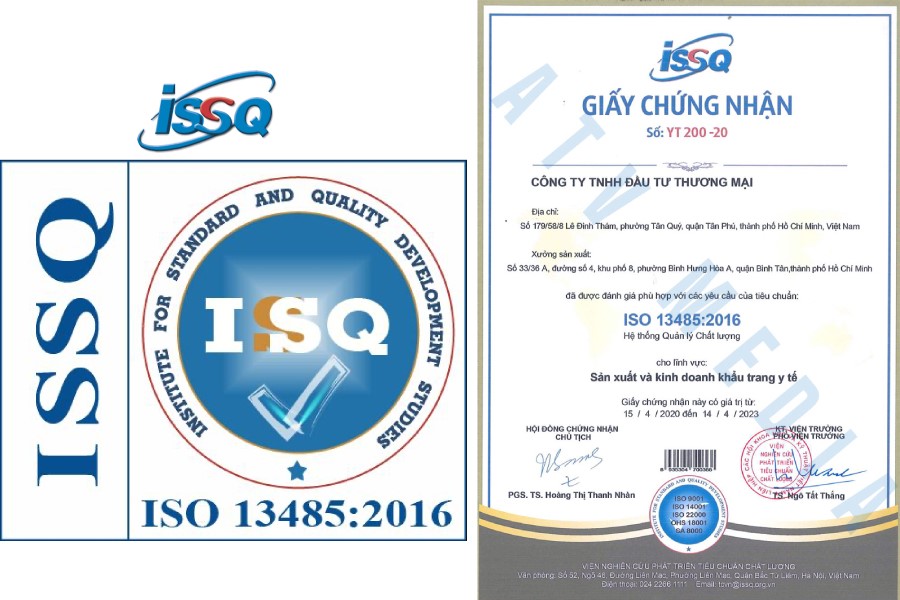

INSTITUTE FOR STANDARD AND QUALITY DEVELOPMENT STUDIES

7 Steps to Build and Implement ISO 13485:2016

The ISO 13485 standard specifies requirements for a quality management system where an organization needs to demonstrate its ability to consistently provide medical devices and related services that meet customer requirements and applicable regulatory requirements.

Such organizations may be involved in one or more stages of the medical device lifecycle, including design and development, production, storage and distribution, installation, servicing of medical devices, as well as the design and development or provision of related activities (e.g., technical support).

Contact: +84 981 85 1111

Overview

To obtain certification, enterprises need to understand the following 7 steps to build and implement ISO 13485:2016:

Step 1: Study and Establish a Project Steering Committee

Before implementing the ISO 13485:2016 quality management system, understanding this certification plays a very important role. Enterprises need to research and learn basic knowledge about ISO standards in order to apply them effectively.

Next, establish an ISO 13485 project steering committee and appoint an ISO leader in accordance with the standard. Members of the steering committee must possess fundamental knowledge of ISO 13485:2016 as well as the medical device sector.

Based on the organization’s current situation, a plan should be developed to implement the system according to ISO requirements.

Steering committee members need knowledge of the medical field and ISO 13485:2016 certification

Step 2: Awareness Training on the Standard

To shorten the certification timeline, top management and relevant members should receive awareness training on ISO 13485:2016 certification.

Step 3: Develop the Documentation System

After assessing the enterprise’s current status against the requirements of ISO 13485, a detailed implementation plan should be developed. At the same time, the required documentation system should be established and completed, including:

  • Developing a quality manual for the enterprise

  • Establishing documented processes and procedures

  • Developing necessary instructions, regulations, and policies

After completing the documentation system, it should be reviewed, revised, and guidance on implementation should begin.

Enterprises need to develop a documentation system in accordance with ISO 13485:2016.

Step 4: Implementation

After completing the documentation set, enterprises must implement it to demonstrate the effectiveness and efficiency of the quality management system. Activities in this step include:

  • Communicating ISO 13485 information to all employees

  • Organizing training and guidance so that staff follow established procedures

  • Conducting evaluation meetings, collecting feedback, and making adjustments to achieve optimal results

Step 5: Internal Audit and Management Review

To prepare for the certification audit, enterprises must conduct internal audits and management reviews. Activities include:

  • Pre-certification audit: Reviewing whether the quality management system is compliant with the standard, whether it is effective, identifying problems and proposing corrective actions. This audit can be conducted internally or by an external organization.

  • Selecting a certification body: This can be done from the beginning or at this stage. The certification body will assess and issue certification to the enterprise.

Step 6: Certification Audit and Certification Granting

After ensuring that facilities and production equipment meet ISO 13485 requirements, enterprises should select a reputable certification body.

At this stage, the certification body will conduct the official audit and issue certification if all ISO 13485 criteria are satisfied.

It is necessary to conduct evaluation and review after implementing the ISO 13485:2016 quality management system.

Step 7: System Maintenance

At this stage, enterprises must address any outstanding issues identified during the audit and maintain the quality management system. Continuous maintenance and improvement are required because the certification body will carry out ongoing surveillance.

ISO 13485:2016 certification will be subject to annual surveillance audits, and recertification will take place two months before the 3-year validity period expires.

These are the 7 steps to build and implement ISO 13485:2016. If you still have questions or face difficulties in certification, please contact ISSQ Institute of Quality immediately. With a team of consultants and experts having more than 10 years of experience and specialized knowledge, we will provide the fastest support.

ISSQ Institute is always ready to accompany enterprises in the process of integration and development.

We are honored to serve our valued customers!

Published date: 07/07/2022

zalo