
INSTITUTE FOR STANDARD AND QUALITY DEVELOPMENT STUDIES


16/05/2026
In the context of education increasingly focusing on training quality, learner experience, and management efficiency, many educational organizations are becoming more interested in systematic and professional management standards.
Not only schools and training centers, but also internal corporate training units are seeking solutions to improve operational quality and build sustainable credibility.
As a result, ISO 21001 is becoming one of the most widely recognized standards among educational organizations thanks to its ability to support effective management, continuous improvement, and learner-centered development.
Let’s explore with ISSQ Quality Institute why ISO 21001 is receiving growing attention in the education sector today.
ISO 21001 is an international standard for Educational Organizations Management Systems (EOMS), developed to help educational institutions improve management quality and training effectiveness.
This standard was issued by the International Organization for Standardization (ISO) and applies to many types of educational organizations, including:
Unlike general management standards, ISO 21001 was specifically developed for the education sector, so it contains many requirements suitable for managing learners, training programs, teaching methods, and learner experiences. This is also one of the reasons why the standard is attracting increasing attention and adoption among educational organizations.
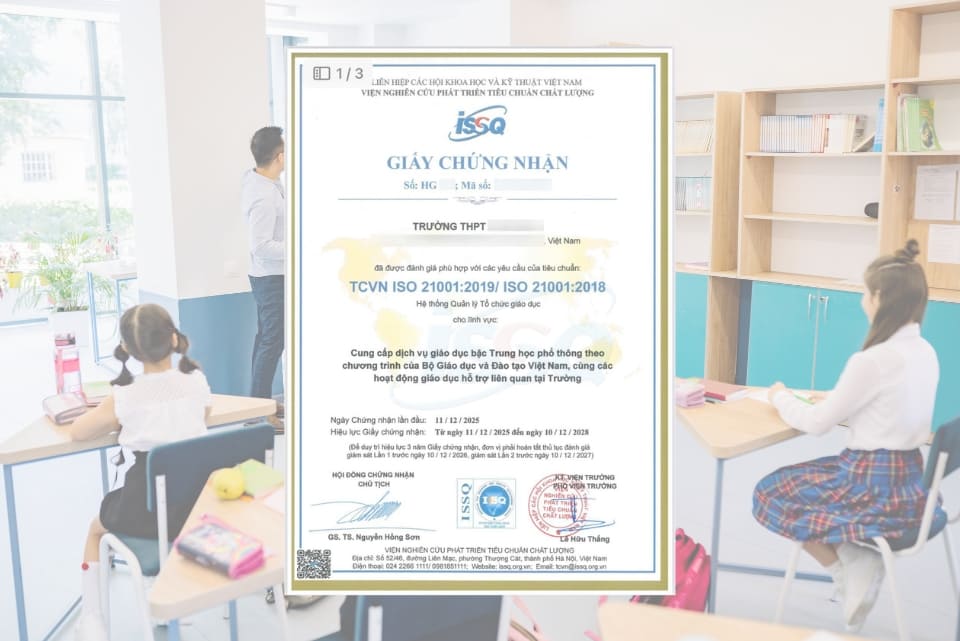
Today, the education sector is not only concerned with teaching activities but is also placing greater emphasis on management quality, learner experience, and operational efficiency. This is why many educational organizations are increasingly interested in structured and professional management systems.
It can be seen that as training quality and learner experience become increasingly important, building a systematic management system is becoming a major trend among educational organizations. This also serves as a foundation for improving operational efficiency, enhancing reputation, and achieving sustainable development in an increasingly competitive educational environment.
Implementing ISO 21001 not only helps educational organizations standardize management systems but also contributes to improving training quality and learner experiences. Some notable benefits include:
ISO 21001 is not only a tool for establishing management processes but also helps educational organizations improve training quality, enhance professionalism, and create competitive advantages in the rapidly evolving education sector.

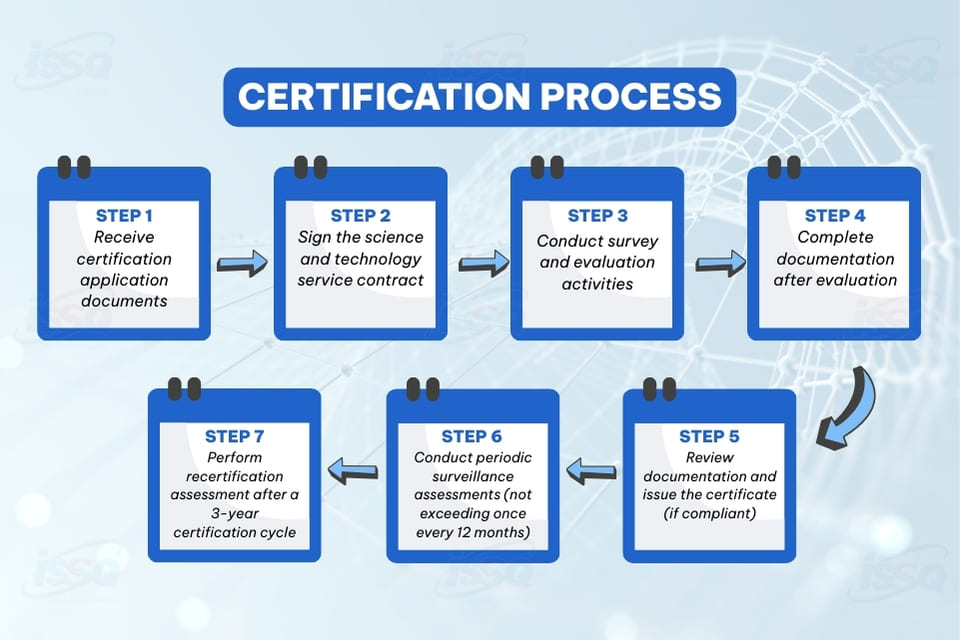
To establish and certify a management system according to ISO 21001, educational organizations generally follow these basic steps:
Step 1: Receive certification registration documents
Step 2: Sign the science and technology service contract
Step 3: Conduct surveys and assessments
Step 4: Complete documentation after assessment
Step 5: Review documents and issue certification (if compliant)
Step 6: Conduct surveillance assessments at intervals not exceeding 12 months
Step 7: Conduct recertification assessment (certificate validity: 3 years)
In the context of the education sector increasingly emphasizing training quality, learner experience, and management effectiveness, ISO 21001 is becoming a standard that many educational organizations are interested in and applying.
Building a management system according to ISO 21001 not only helps standardize operations but also contributes to enhancing reputation, improving training quality, and promoting sustainable development.
Organizations seeking assessment and certification for ISO 21001 Educational Organizations Management Systems may contact ISSQ Quality Institute via hotline: (+84) 981851111 or email: vienchatluong@issq.org.vn | tcvn@issq.org.vn for support with procedures.
Publication date: May 16, 2026


