
INSTITUTE FOR STANDARD AND QUALITY DEVELOPMENT STUDIES


18/03/2026
Choosing safe toys for children under 3 years old is not merely a matter of preference or demand; it is a decision directly related to children’s health and development. Among current regulations, QCVN 3:2019/BKHCN specifies safety requirements for children’s toys, corresponding testing methods, and quality management requirements for toys manufactured domestically, imported, and circulated on the market.
This article by the ISSQ Institute for Quality will help parents and businesses better understand how to identify toys that comply with QCVN 3, thereby contributing to a healthy and safe play environment for young children.
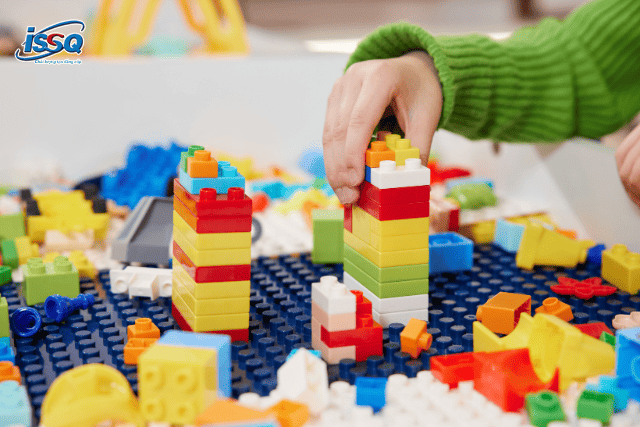
Toys are the first companions that help children learn, explore the world, and develop intelligence. However, toys that have not been granted conformity certification in accordance with state regulations may pose serious risks to children’s health and safety, such as:
Chemical poisoning from paints, plastics, or heavy metals;
Choking hazards caused by swallowing small parts;
Scratches, burns, or damage to hearing and vision.
Therefore, parents need to clearly understand how safe toys are regulated and how to recognize them at the purchasing stage.
QCVN 3:2019/BKHCN is the National Technical Regulation on the safety of children’s toys, issued by the Ministry of Science and Technology.
Under this regulation, children’s toys are defined as any product or material designed or clearly intended for use in play by children under 16 years of age.
QCVN 3:2019/BKHCN applies to organizations and individuals involved in the manufacturing, importation, distribution, and retail of children’s toys, as well as to state management agencies and other relevant stakeholders.
The regulation establishes technical safety requirements for children’s toys in order to:
Prevent mechanical, physical, chemical, and hygiene-related risks;
Ensure products are suitable for specific age groups;
Require enterprises to obtain conformity certification and affix the CR conformity mark before placing products on the market.
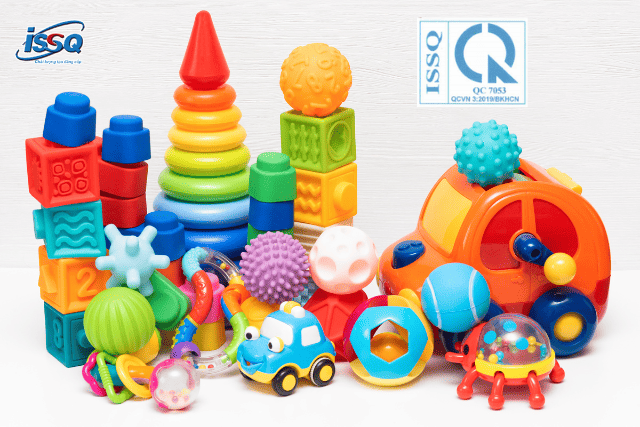
Parents can apply the following five quick inspection principles, based on technical criteria specified in QCVN 3, to choose safe toys.
Toys for children under 3 must not contain detachable small parts or parts smaller than a child’s mouth.
Toys must not have sharp points, sharp edges, long cords, or easily detachable components.
Sound-emitting toys must not exceed 85 dB to protect hearing.
Prioritize toys made from virgin plastic, natural wood, safe fabrics, and paints free from lead, cadmium, and phthalates.
Avoid products with strong plastic odors, peeling surfaces, or color smearing when touched.
Products must not contain heavy metals exceeding permitted limits.
Packaging of compliant toys must include:
Product name, manufacturer, and country of origin;
Recommended age (e.g., “For children over 3 years old” or “Not suitable for children under 36 months”);
Safety warnings in Vietnamese;
The CR conformity mark, indicating the product has been certified in accordance with QCVN 3.
Only choose toys with invoices, labels, and conformity certification.
Avoid products of unknown origin sold widely at markets or at unusually low online prices.
Be especially cautious with electronic, light-emitting, or sound-emitting toys, as they require additional checks for electrical safety, electromagnetic fields, and noise levels.
If a child shows signs of allergy, skin redness, or respiratory irritation, stop using the toy immediately.
Toys should be cleaned, dried, and periodically inspected to prevent contamination or damage.
Not only parents, but also manufacturers, importers, distributors, and retailers play a crucial role in protecting children.
According to QCVN 3:2019/BKHCN, before products are placed on the market, enterprises must:
Obtain conformity certification from organizations designated by the Ministry of Science and Technology (e.g., the ISSQ Institute for Quality);
Affix the CR conformity mark to products;
Make a conformity declaration in accordance with regulations;
Maintain periodic quality inspection.
Compliance with the regulation not only helps enterprises meet legal requirements but also:
Enhances reputation and consumer trust;
Expands opportunities for cooperation and export to markets with equivalent standards;
Contributes to building a safe consumption environment for Vietnamese children.
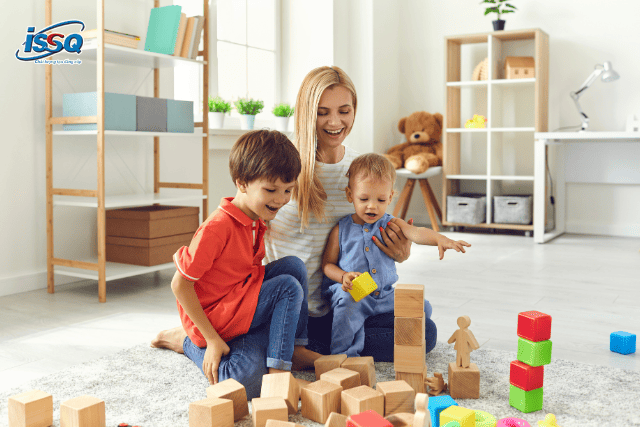
Toys are not only for entertainment but also tools for learning, shaping thinking, and forming personality.
A toy that meets safety requirements not only enables healthy play but also reflects the love, care, and responsibility of adults.
The ISSQ Institute for Quality is a designated organization by the Ministry of Science and Technology, capable of conducting conformity certification for children’s toys in accordance with QCVN 3:2019/BKHCN.
ISSQ not only supports enterprises in complying with regulations but also promotes the values of “Safety – Quality – For Vietnamese Children.”
ISSQ is always ready to accompany customers in the process of integration and development.
Published date: 23 October 2025


