
INSTITUTE FOR STANDARD AND QUALITY DEVELOPMENT STUDIES


QCVN 12-4:2015/BYT stipulates technical requirements and management requirements on hygiene and safety for glass, ceramic, porcelain, and enameled packaging and utensils in direct contact with food (hereinafter referred to as packaging and utensils). This regulation applies to organizations and individuals importing, manufacturing, and trading packaging and utensils in Vietnam, as well as relevant state management agencies.
Glass, ceramic, porcelain, and enameled packaging and utensils are widely used in food storage, processing, and serving thanks to their convenience and high aesthetic value. However, products that come into direct contact with food must be strictly controlled in terms of safety levels in order to minimize the risk of hazardous substances migrating into food and affecting consumer health.
Therefore, conformity certification according to QCVN 12-4:2015/BYT is an important requirement for organizations and individuals manufacturing, importing, and trading products within the scope of regulation.
Let ISSQ Quality Institute help you better understand QCVN 12-4:2015/BYT, the technical requirements, as well as the conformity certification process for glass, ceramic, porcelain, and enameled packaging and utensils in direct contact with food through the article below.
Glass, ceramic, porcelain, and enameled packaging and utensils are products used for containing, preserving, processing, or directly contacting food during daily use. These materials are commonly used due to their high aesthetic value, durability, and ability to meet various usage needs in households, restaurants, hotels, industrial kitchens, and the food industry.
These are products manufactured from glass materials, typically featuring transparency, easy cleaning, and resistance to retaining food odors. This product group is commonly used for containing food, beverages, or serving food processing purposes.
Common products include: glass cups, glass mugs, glass bottles, food storage jars, heat-resistant glass trays, glass food containers, etc.
These products are made from clay or mineral materials and fired at high temperatures to create hardness, durability, and heat resistance. Ceramic and porcelain products are widely used in dining and food service applications.
Common products include: bowls, plates, dishes, trays, teapots, cups, porcelain bowls, ceramic and porcelain food containers, etc.
According to the regulation, enameled packaging and utensils are products made from glass, ceramics, glass-ceramics, porcelain, or metal coated with glass enamel or porcelain enamel on the surface.
This enamel coating enhances aesthetics, limits corrosion, facilitates cleaning, and helps resist dirt adhesion during use.
Common products include: enameled pots, enameled mugs, enameled trays, enameled basins, enamel-coated cookware, etc.
As these products come into direct contact with food, their safety indicators must be controlled to minimize the risk of hazardous substances such as lead or cadmium migrating during use.
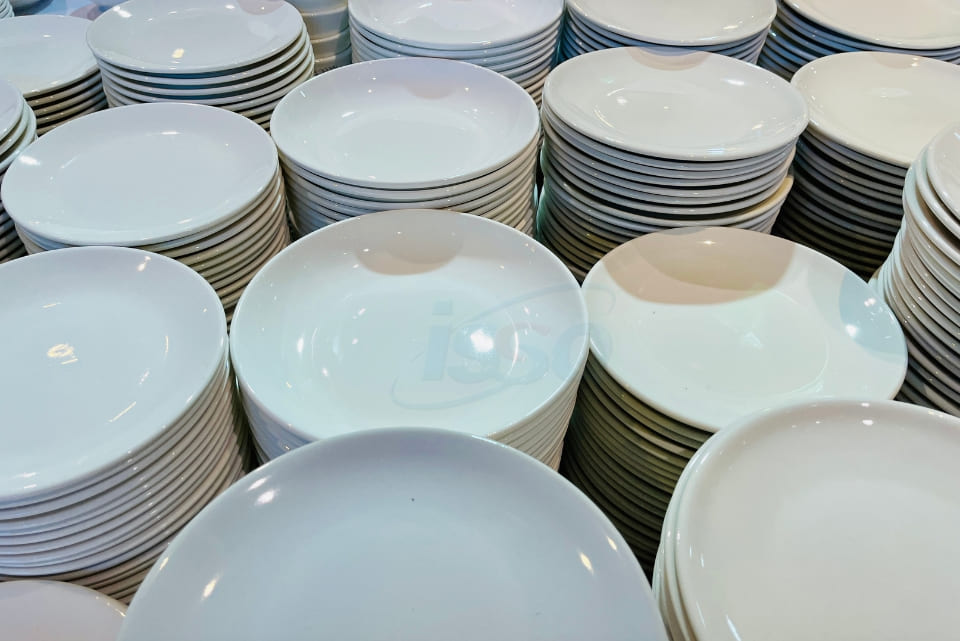
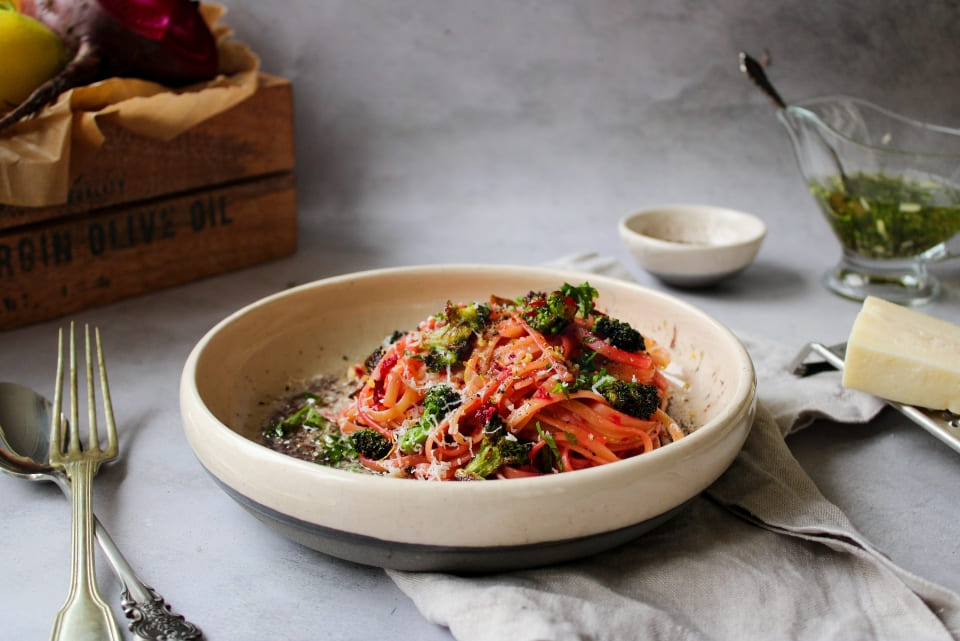
Glass, ceramic, porcelain, and enameled packaging and utensils are products that come into direct contact with food during storage, processing, and daily use. If the material quality or enamel coating is not properly controlled, the products may pose a risk of heavy metal migration such as lead (Pb) and cadmium (Cd) into food, especially when exposed to high temperatures, acidic foods, or long-term use.
In reality, many low-cost products of unclear origin or manufactured from poor-quality materials may pose safety risks to users. This not only affects consumer health but also creates risks for businesses during product circulation and trading in the market.
Therefore, the Ministry of Health issued QCVN 12-4:2015/BYT to stipulate technical and management requirements for glass, ceramic, porcelain, and enameled packaging and utensils in direct contact with food. This regulation focuses on controlling safety indicators such as migration limits of lead and cadmium to ensure products comply with food hygiene and safety requirements.
According to the regulation, organizations and individuals importing, manufacturing, and trading products within the scope of regulation are required to carry out conformity declaration procedures before placing products on the market.
Conformity certification according to QCVN 12-4:2015/BYT not only helps businesses comply with legal requirements but also contributes to product quality control, brand reputation enhancement, and building trust with customers and partners during business operations.
QCVN 12-4:2015/BYT is the National Technical Regulation on hygiene and safety for glass, ceramic, porcelain, and enameled packaging and utensils in direct contact with food, issued together with Circular No. 35/2015/TT-BYT of the Ministry of Health.
This regulation stipulates technical requirements and management requirements regarding hygiene and safety for glass, ceramic, porcelain, and enameled packaging and utensils in direct contact with food (hereinafter referred to as packaging and utensils).
QCVN 12-4:2015/BYT applies to organizations and individuals importing, manufacturing, and trading packaging and utensils in Vietnam, as well as relevant state management agencies.
| No. | Test Indicator | Maximum Limit |
| 1 | Flat shallowware | |
| Used for containing and cooking | ||
| Cadmium (mg/dm2) | 0.07 | |
| Lead (mg/dm2) | 0.8 | |
| 2 | Hollowware | |
| 2.1 | Used for containing | |
| 2.1.2001 | Capacity less than 600 ml | |
| Cadmium (mg/l) | 0.5 | |
| Lead (mg/l) | 1.5 | |
| 2.1.2002 | Capacity from 600 ml to less than 3,000 ml | |
| Cadmium (mg/l) | 0.25 | |
| Lead (mg/l) | 0.75 | |
| 2.1.2003 | Capacity greater than or equal to 3,000 ml | |
| Cadmium (mg/l) | 0.25 | |
| Lead (mg/l) | 0.5 | |
| 2.2 | Used for cooking | |
| Cadmium (mg/l) | 0.05 | |
| Lead (mg/l) | 0.5 | |
| 3 | Cups and mugs | |
| Cadmium (mg/l) | 0.25 | |
| Lead (mg/l) | 0.5 | |
Note:
Unit of measurement:
| No. | Test Indicator | Maximum Limit |
|---|---|---|
| 1 | Flat shallowware | |
| Used for containing and cooking | ||
| Cadmium (mg/dm2) | 0.07 | |
| Lead (mg/dm2) | 0.8 | |
| 2 | Hollowware | |
| 2.1 | Used for containing | |
| 2.1.1 | Capacity less than 1,100 ml | |
| Cadmium (mg/l) | 0.5 | |
| Lead (mg/l) | 2.0 | |
| 2.1.2 | Capacity from 1,100 ml to less than 3,000 ml | |
| Cadmium (mg/l) | 0.25 | |
| Lead (mg/l) | 1.0 | |
| 2.1.3 | Capacity greater than or equal to 3,000 ml | |
| Cadmium (mg/l) | 0.25 | |
| Lead (mg/l) | 0.5 | |
| 2.2 | Used for cooking | |
| Cadmium (mg/l) | 0.05 | |
| Lead (mg/l) | 0.5 | |
| 3 | Cups and mugs | |
| Cadmium (mg/l) | 0.25 | |
| Lead (mg/l) | 0.5 | |
Note:
Unit of measurement:
| No. | Test Indicator | Maximum Limit |
|---|---|---|
| 1 | Flat shallowware | |
| 1.1 | Used for containing | |
| Cadmium (mg/dm2) | 0.07 | |
| Lead (mg/dm2) | 0.8 | |
| 1.2 | Used for cooking | |
| Cadmium (mg/dm2) | 0.05 | |
| Lead (mg/dm2) | 0.1 | |
| 2 | Hollowware | |
| 2.1 | Capacity less than 3,000 ml | |
| 2.1.1 | Used for containing | |
| Cadmium (mg/l) | 0.07 | |
| Lead (mg/l) | 0.8 | |
| 2.1.2 | Used for cooking | |
| Cadmium (mg/l) | 0.07 | |
| Lead (mg/l) | 0.4 | |
| 2.2 | Capacity greater than or equal to 3,000 ml (used for containing and cooking) | |
| Cadmium (mg/dm2) | 0.05 | |
| Lead (mg/dm2) | 0.1 | |
Note:
Unit of measurement:
| No. | Test Indicator | Maximum Limit |
|---|---|---|
| 1 | Cadmium (mg/drinking rim) | 0.2 |
| 2 | Lead (mg/drinking rim) | 2.0 |
Note:
Unit of measurement: mg/drinking rim of utensils and packaging.
Conformity certification for glass, ceramic, porcelain, and enameled packaging and utensils according to QCVN 12-4:2015/BYT not only helps businesses comply with food safety management requirements but also provides many benefits in production, business operations, and market development.
Conformity certification according to QCVN 12-4:2015/BYT is not only a requirement related to quality management for food-contact products but also a solution that helps businesses enhance reputation, improve competitiveness, and achieve sustainable market development.
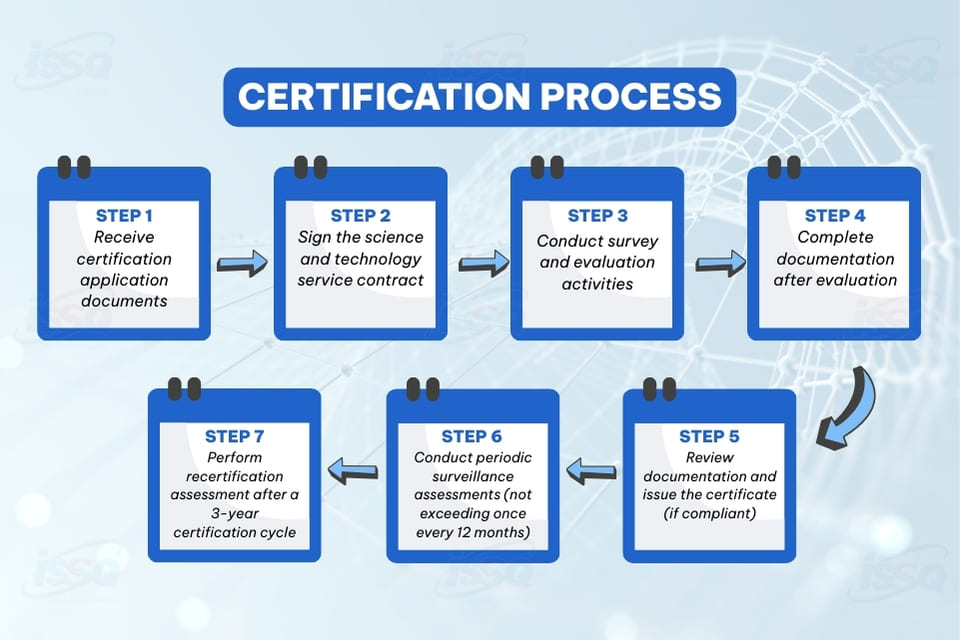
To obtain conformity certification for glass, ceramic, porcelain, and enameled packaging and utensils according to QCVN 12-4:2015/BYT, businesses must undergo assessment, dossier appraisal, and surveillance activities in accordance with current regulations. The certification process generally includes the following basic steps:
Step 1: Receive certification registration dossier
Step 2: Sign scientific and technological service contract
Step 3: Conduct survey and assessment
Step 4: Complete post-assessment dossier
Step 5: Appraise dossier and issue certificate (if compliant)
Step 6: Conduct surveillance assessment at least once every 12 months
Step 7: Conduct recertification assessment (certificate expires after 3 years)
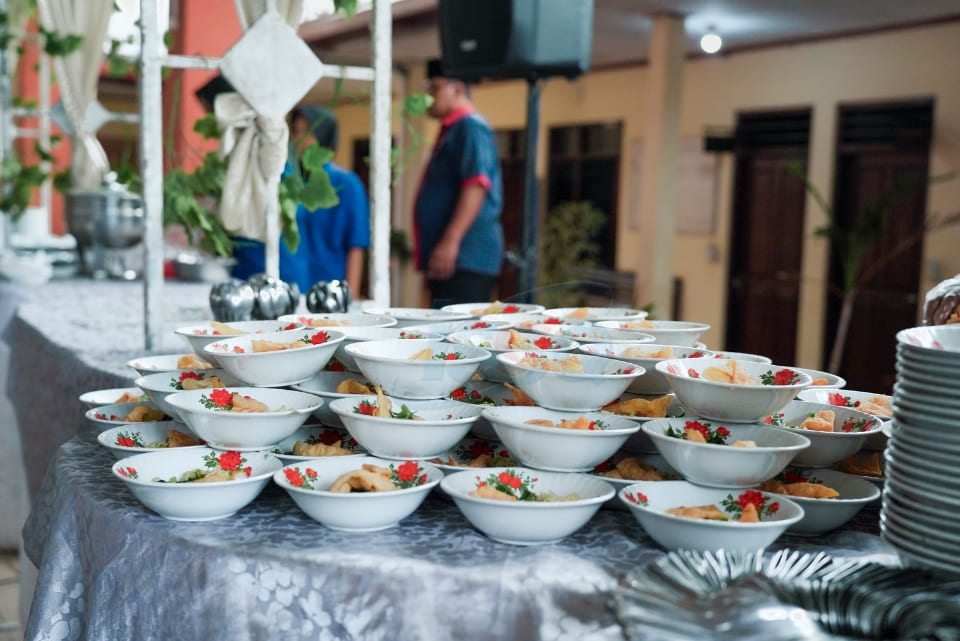
Glass, ceramic, porcelain, and enameled packaging and utensils are products that come into direct contact with food, therefore they must be strictly controlled for safety during production and market circulation. Conformity certification according to QCVN 12-4:2015/BYT not only helps businesses comply with legal requirements but also contributes to improving product quality, enhancing brand reputation, and building customer trust.
Companies requiring certification assessment for QCVN 12-4:2015/BYT on hygiene and safety for glass, ceramic, porcelain, and enameled packaging and utensils may contact ISSQ Quality Institute via hotline: +84 981 851 111 or email: vienchatluong@issq.org.vn | tcvn@issq.org.vn for support.
Published date: 06/05/2026


