
INSTITUTE FOR STANDARD AND QUALITY DEVELOPMENT STUDIES


Obtaining conformity certification for lead content limits in paint in accordance with QCVN 08 not only helps businesses comply with legal requirements but also provides a solid foundation for improving product quality and achieving sustainable market development.
Paint is widely used in residential buildings, industrial projects, and a wide range of consumer products. In addition to factors such as color, durability, and aesthetics, controlling the lead content in paint has become increasingly important to ensure consumer safety and comply with applicable legal regulations.
Join the ISSQ Quality Institute in discovering why controlling lead content in paint is essential, the benefits of regulatory compliance, and effective solutions that help businesses enhance product quality before placing products on the market.
Lead content in paint refers to the amount of the element lead contained in a paint product, typically measured in mg/kg (ppm). Lead may be present in paint due to the use of certain pigments, colorants, additives, or raw materials during the manufacturing process. Without proper control, lead content may exceed permissible limits, negatively affecting product quality and posing potential risks to consumer safety.
Lead may be present in paint products from various sources, including:
Lead is a highly toxic heavy metal that can adversely affect human health through prolonged exposure or accumulation in the body. Therefore, Vietnamese regulations establish maximum permissible limits for lead content in paint to protect consumers—particularly children—while also improving product quality and safety for products circulating in the marketplace.

Controlling the lead content in paint is an essential requirement for minimizing health risks, ensuring product quality, and complying with current regulations. Without effective control measures, excessive lead levels may result in significant consequences for both manufacturers and end users.
Therefore, controlling lead content in paint is not merely a technical requirement but also an effective solution for helping businesses minimize risks, comply with legal regulations, and ensure product quality before placing products on the market.

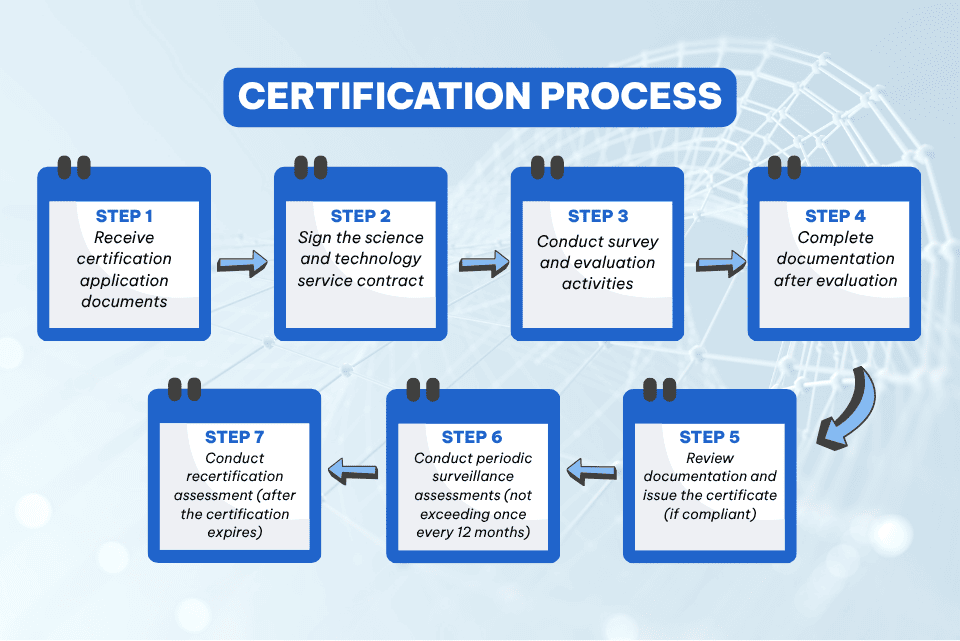
To ensure that paint products comply with the requirements of QCVN 08 and are legally permitted to be marketed, businesses should complete the conformity certification process through the following steps:
Step 1: Receive the application dossier for certification.
Step 2: Sign the science and technology service agreement.
Step 3: Conduct surveys and conformity assessments.
Step 4: Complete the post-assessment documentation.
Step 5: Review the assessment results and issue the Certificate of Conformity (if the product complies with the applicable requirements).
Step 6: Conduct surveillance assessments at intervals not exceeding 12 months.
Step 7: Carry out recertification after the certificate expires.
Conformity certification for lead content limits in paint in accordance with QCVN 08:2020/BCT not only enables businesses to comply with legal requirements but also demonstrates product quality, enhances brand credibility, and facilitates business operations. Key benefits include:
Obtaining conformity certification for lead content limits in paint in accordance with QCVN 08 not only helps businesses comply with regulatory requirements but also establishes a solid foundation for improving product quality and achieving sustainable growth in the marketplace.
If your company requires conformity certification for lead content limits in paint in accordance with QCVN 08, please contact the ISSQ Quality Institute for professional support with certification procedures:
Publication Date: 28 July 2026


