
INSTITUTE FOR STANDARD AND QUALITY DEVELOPMENT STUDIES


Starting July 1, 2026, Circular 36/2026/TT-BKHCN enforces a risk-based management approach (High and Medium Risk) for electrical and electronic equipment under QCVN 4:2009/BKHCN. This classification directly determines certification methods, conformity declaration procedures, and import inspection processes. Enterprises must proactively review model lists, identify correct testing standards, and standardize technical dossiers to ensure smooth customs clearance and market distribution.
Household electrical and electronic equipment is a product group that directly affects user safety. Just a small flaw in insulation, protective construction, or heat resistance can lead to electric shock, fire, explosion, and property damage. Therefore, many products in this category must comply with QCVN 4:2009/BKHCN and Amendment 1:2016 prior to being introduced into the Vietnamese market.
Starting July 1, 2026, Circular 36/2026/TT-BKHCN comes into effect, transitioning the quality management of products and goods to a risk-based approach. This is a critical change that manufacturing, importing, and trading enterprises of electrical and electronic equipment must pay special attention to. QCVN 4:2009/BKHCN is not being replaced at this time; the new points mainly lie in product classification by risk level, grounds for conformity declaration, conformity assessment methods, and inspection requirements for imported goods.
Prior to July 1, 2026, products within the scope of QCVN 4:2009/BKHCN were generally managed under the group of products and goods with safety risk potential (Group 2 goods), with requirements for conformity certification, conformity declaration, and quality inspection of imported goods in accordance with relevant regulations.
From July 1, 2026, Circular 36/2026/TT-BKHCN classifies products and goods under the management scope of the Ministry of Science and Technology into two categories: high-risk and medium-risk. Each group has different management requirements. When regulations in previously issued QCVNs differ from the management requirements in Circular 36, enterprises shall comply with Circular 36/2026/TT-BKHCN.
Several products subject to QCVN 4:2009/BKHCN are classified as high-risk, such as household hair dryers, electric rice cookers, water kettles, electric thermo pots, certain types of fans, PVC insulated cables, and extruded insulated cables within the specified scope.
For this group, enterprises declare conformity based on conformity certification results issued by a certification body designated by the Ministry of Science and Technology. Applicable conformity assessment methods are Scheme 5 or Scheme 7 under Circular 14/2026/TT-BKHCN. Imported goods must undergo state quality inspection in accordance with regulations.
Circular 36/2026/TT-BKHCN also places many products subject to QCVN 4:2009/BKHCN into the medium-risk group. These include certain types of household electric fans, hot and cold water dispensers, pressure cookers, slow cookers, steamers, herbal medicine cookers, electric skillets, tea or coffee making appliances, electric irons, microwave ovens, and certain types of household ovens.
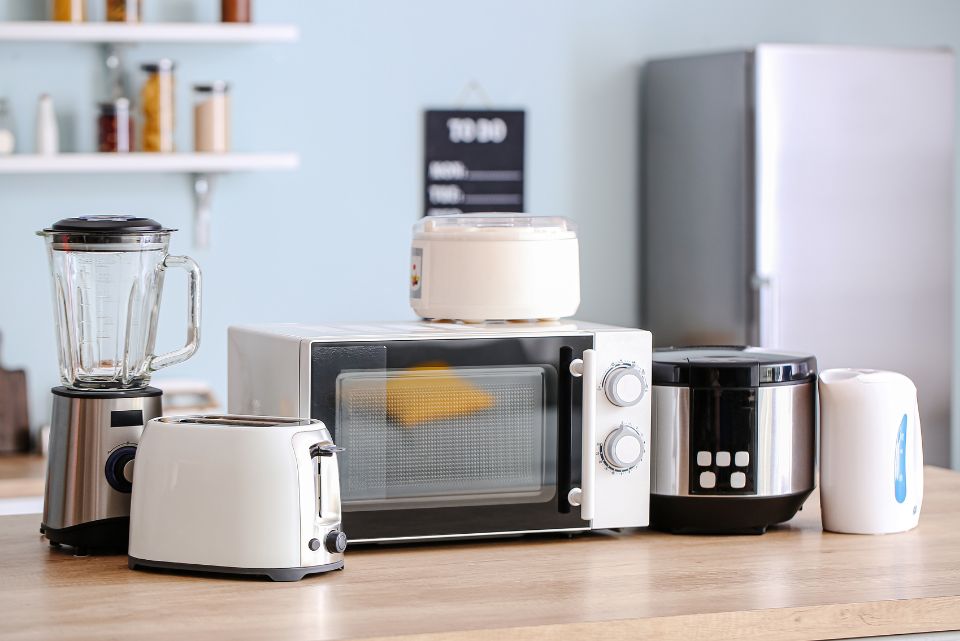
For this group, technical regulation conformity declaration can be based on certification results from an accredited or designated certification body, or based on self-assessment results conducted by the organization or individual. Applicable methods include Scheme 1, Scheme 5, or Scheme 7, depending on the product type, manufacturing method, or import structure.
This does not mean enterprises can skip testing. Testing results must still be provided by a testing body with appropriate competence. For imported goods in this group, enterprises must complete the conformity declaration prior to market circulation as required in the list.
Conformity certificates and notices of receipt of conformity declaration issued before July 1, 2026, remain valid until the expiration date stated on the documents. Surveillance activities to maintain the validity of old certificates continue in accordance with the regulations applicable at the time of issuance.
Applications for conformity certification registration or import quality inspection received before July 1, 2026, but not yet resolved, will continue to be processed under the regulations in effect at the time of receipt.
Enterprises should compile a complete catalog by model, brand, manufacturer, country of origin, voltage, power rating, function, and HS code. Each model must be cross-referenced with the descriptions in Annex I or Annex II of Circular 36/2026/TT-BKHCN to determine whether the product belongs to the high-risk or medium-risk group.
This is a crucial step because even under the same QCVN 4:2009/BKHCN, obligations may differ. For example, certain fan types fall under the high-risk group, while others belong to the medium-risk group.
Enterprises must identify the correct corresponding TCVN standard and applicable version, and review requirements in advance regarding electric shock protection, insulation, earthing, heat resistance, supply cords, protective components, warnings, and user instructions.
High-risk products apply Scheme 5 or Scheme 7. Stable supply sources usually suit Scheme 5; batch-based imports may suit Scheme 7. For medium-risk products, enterprises can evaluate Scheme 1, Scheme 5, or Scheme 7, choosing third-party certification or self-assessment if conditions are met.
The dossier should include: business registration certificate; product description, catalog, and photos; circuit diagrams; component list; user manual; product label; manufacturer information; testing results; quality control documentation; and shipment records.
Enterprises must ensure that the product name, model, brand, and manufacturer are consistent across the contract, invoice, packing list, customs declaration, catalog, test samples, test report, and certificate. Discrepancies in information between documents are a common reason for filing amendments or scope misalignments in certificates.
The scope of accreditation or designation must accurately cover the specific product, parameters, and QCVN. High-risk groups must use a designated certification body. Before signing contracts, confirm capacity scope, schemes, sample quantities, testing duration, factory assessment requirements, and surveillance terms.
After assessment, enterprises must declare conformity as regulated, affix the CR mark, label the product, and present safety warnings prior to circulation. Importers must clearly determine whether the product is subject to state inspection or pre-circulation conformity declaration.
Enterprises need to control changes in materials, components, designs, factories, suppliers, and specifications, while systematically archiving testing, certification, conformity declaration, and traceability records.
First, do not assume that all products under QCVN 4:2009/BKHCN share the exact same procedures. Classify down to each model and match against HS codes, technical descriptions, and risk groups accurately.
Second, build a compliance matrix specifying each product, applicable QCVN/TCVN, risk level, assessment scheme, testing requirement, certification, declaration, and import inspection status.
Third, require suppliers to maintain stable product configurations and provide advance notice of any changes. Do not assume that any IEC or CB report will automatically replace testing results required for conformity in Vietnam.
Fourth, only proceed with self-assessment for medium-risk products when qualified technical personnel and dossier systems can sufficiently substantiate compliance. Third-party certification remains valuable for increasing reliability and reducing errors.
Finally, enterprises should proactively conduct compliance gap assessments before placing orders, launching mass production, or filing customs declarations. Early preparation minimizes risks of warehousing delays, clearance bottlenecks, re-testing, or last-minute label and dossier adjustments.

Starting July 1, 2026, QCVN 4:2009/BKHCN conformity certification operates under a new risk-based management mechanism. High-risk products must continue to be certified by designated bodies and undergo state import quality inspection; medium-risk products benefit from a more flexible mechanism, including the option for self-assessment if conditions are met.
To ensure effective compliance, enterprises should begin by accurately classifying products, identifying testing standards, selecting assessment schemes, standardizing technical dossiers, and maintaining post-certification controls. Methodical preparation not only satisfies legal requirements but also elevates product safety, brand reputation, and market competitiveness.
If your company requires support with QCVN 4:2009/BKHCN evaluation and certification procedures, please contact ISSQ Quality Institute via hotline: +84 981851111 or email: vienchatluong@issq.org.vn | tcvn@issq.org.vn for assistance.


