
INSTITUTE FOR STANDARD AND QUALITY DEVELOPMENT STUDIES


Wood-based panels are increasingly used in furniture and construction thanks to their flexibility, reasonable cost, and ability to replace natural wood. However, to ensure quality and safety during use, these products need to be controlled according to certain technical requirements before being placed on the market.
In this context, conformity certification under QCVN 16 becomes an important basis for evaluating and confirming the product's compliance with corresponding technical requirements.
Let’s join ISSQ Quality Institute to explore the requirements, benefits, and certification process for wood-based panels in the article below.
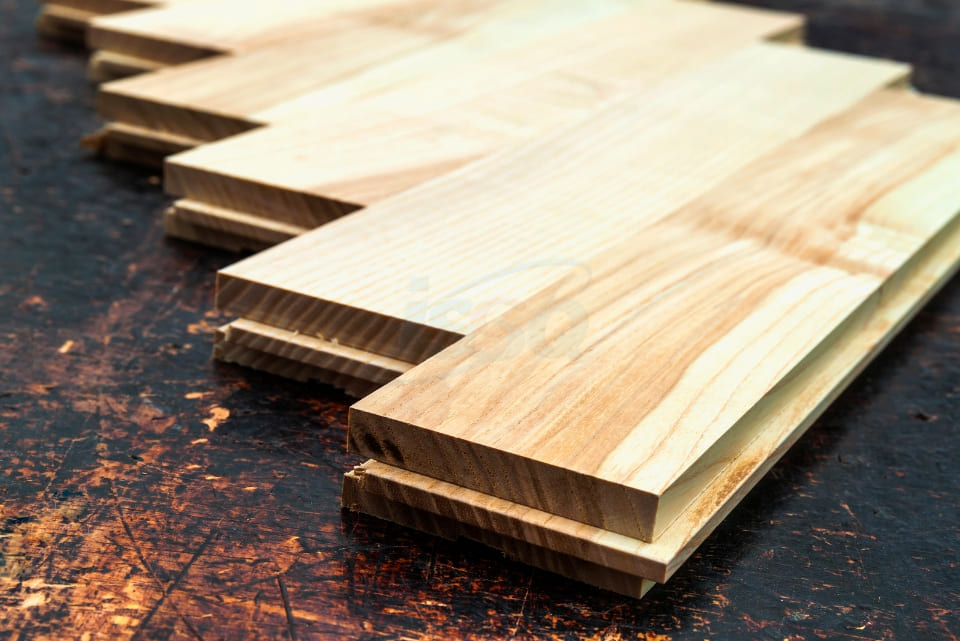
Wood-based panels (also known as engineered wood or industrial wood panels) are materials made from wood fibers, wood chips, or wood powder, combined with adhesives and additives, then compressed under high pressure and temperature to form finished boards.
Thanks to this manufacturing process, wood-based panels are more stable than natural wood, with flat surfaces, relatively high durability, reduced warping and shrinkage, and better resistance to termites. At the same time, these products are reasonably priced and suitable for widespread market demand.
With these characteristics, wood-based panels are considered an effective alternative to natural wood, helping optimize costs and reduce pressure on forest resources in furniture and construction.
QCVN 16:2023/BXD is the National Technical Regulation on construction products and goods, specifying technical limit values and management requirements for construction materials under the regulated product list. This regulation applies to products manufactured domestically, imported, traded, circulated in the market, and used in construction projects in Vietnam.
Applicable subjects include:
According to regulations, Group 2 construction materials are products that may still pose risks to people, property, and the environment under normal conditions of use. Therefore, these products need to be quality-controlled through conformity certification before being placed on the market.
Wood-based panels are among the products subject to conformity assessment.

Wood-based panels are materials directly used in living spaces and construction works. Therefore, factors such as mechanical strength, load-bearing capacity, and especially formaldehyde emission levels need to be strictly controlled.
QCVN 16 specifies that wood-based panels must meet the following technical indicators:
| Product | Technical Indicator | Requirement Level | Test Method | Sampling Requirement |
|---|---|---|---|---|
| Fiberboard | Thickness swelling after water immersion | Depending on each type according to TCVN 7753:2007 | TCVN 12445:2018 (ISO 16983:2003) | Minimum of 02 full-size samples per lot |
| Static bending strength | TCVN 12446:2018 (ISO 16978:2003) | |||
| Internal bond strength perpendicular to the board surface | TCVN 12447:2018 (ISO 16984:2003) | |||
| Formaldehyde emission content – E1 classification | ≤ 0.124 mg/m³ or ≤ 9 mg/100g | TCVN 11899-1:2018 (ISO 12460-1) / TCVN 11899-5:2018 (ISO 12460-5) | ||
| Formaldehyde emission content – E2 classification | > 0.124 mg/m³ or ≤ 30 mg/100g | TCVN 11899-1:2018 / TCVN 11899-5:2018 | ||
| Particleboard | Thickness swelling after water immersion | Depending on each type according to TCVN 12362:2018 (ISO 16893:2016) | TCVN 12445:2018 (ISO 16983:2003) | Minimum of 02 full-size samples per lot |
| Static bending strength | TCVN 12446:2018 (ISO 16978:2003) | |||
| Internal bond strength perpendicular to the board surface | TCVN 12447:2018 (ISO 16984:2003) | |||
| Formaldehyde emission content | ≤ 0.124 mg/m³ or ≤ 0.7 mg/l or ≤ 8.0 mg/100g | TCVN 11899-1:2018 / TCVN 11899-4:2018 / TCVN 11899-5:2018 | ||
| Laminated blockboard (thick and medium) | Formaldehyde emission content | ≤ 0.124 mg/m³ | TCVN 11899-1:2018 (ISO 12460-1) | TCVN 11903:2017 (ISO 16999:2003), 02 samples of size 0.5 × 0.5 m |
Conformity certification under QCVN 16 helps evaluate whether products meet the corresponding technical requirements, thereby ensuring quality and safety during use. At the same time, it is also the basis for businesses to carry out conformity declaration and place products on the market in accordance with management requirements for construction materials.
Through this activity, product quality becomes more transparent, contributing to increased trust and competitiveness in the market.
Conformity certification for wood-based panels under QCVN 16 is not only a technical compliance activity but also brings many practical values to businesses and the market.
Conformity certification for wood-based panels under QCVN 16 not only ensures products meet necessary technical requirements but also helps businesses strengthen their reputation and build a sustainable foundation for development in the construction materials market.
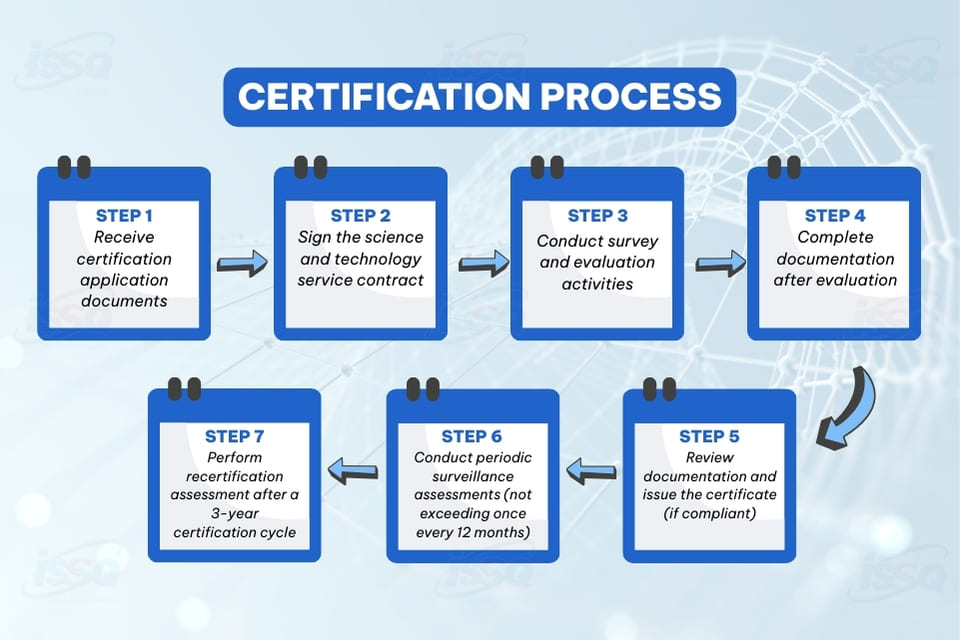
To obtain a conformity certificate, wood-based panels need to go through the QCVN 16 conformity assessment process with the following basic steps:
Step 1: Receive the certification application dossier
Step 2: Sign the scientific and technological service contract
Step 3: Conduct survey and assessment activities
Step 4: Complete the post-assessment dossier
Step 5: Review the dossier and issue the certificate if qualified
Step 6: Conduct surveillance assessment no more than once every 12 months
Step 7: Conduct recertification after the 3-year certification cycle expires
Conformity certification for wood-based panels under QCVN 16 is an important step to ensure products meet the necessary technical requirements before market circulation. In addition to helping control quality and safety in use, this activity also helps businesses improve credibility and competitiveness in the construction materials sector.
Proactively carrying out conformity certification from the beginning will create a solid foundation for stable business development and better meet the increasingly demanding requirements of the market.
Companies in need of conformity certification assessment for wood-based panels under QCVN 16 may contact ISSQ Quality Institute via Hotline: +84 981851111 or email: vienchatluong@issq.org.vn | tcvn@issq.org.vn for procedural support.


