
INSTITUTE FOR STANDARD AND QUALITY DEVELOPMENT STUDIES


Certification of conformity for lubricants under QCVN 14:2018/BKHCN is a mandatory procedure for internal combustion engine lubricants (2-stroke, 4-stroke, mineral-based, synthetic) before being circulated in Vietnam.
The technical regulation QCVN 14:2018/BKHCN does not apply to internal combustion engine lubricants used for security and national defense purposes.
Internal combustion engine lubricants are products widely used in various vehicles and machinery. However, before being circulated on the market, these products must comply with technical requirements and quality management regulations under current standards.
For enterprises manufacturing, blending, or importing internal combustion engine lubricants, preparing a complete conformity certification dossier from the beginning helps shorten evaluation time, minimize additional document requests, and facilitate the certification assessment process.
Let’s explore with the ISSQ Quality Institute the documentation requirements, certification procedures, and benefits of conformity certification for internal combustion engine lubricants under QCVN 14 in the article below.
Internal combustion engine lubricants are oils used to lubricate, cool, clean, and protect engine components during operation. These products are commonly used for gasoline engines, diesel engines, motorcycles, automobiles, ships, generators, and many types of industrial machinery.
During engine operation, metal components continuously rub against each other under high temperatures and pressure. Without suitable lubricants, engines may quickly wear out, overheat, accumulate deposits, or become damaged.
Internal combustion engine lubricants typically perform the following functions:
According to QCVN 14, internal combustion engine lubricants include oils used for 4-stroke and 2-stroke engines. The oils may be manufactured from mineral base oil, synthetic oil, or semi-synthetic oil depending on usage requirements and the technical characteristics of each engine type.
Choosing and using the correct lubricant not only helps engines operate efficiently but also contributes to safety, reduces maintenance costs, and extends equipment lifespan.
QCVN 14 is the National Technical Regulation on Internal Combustion Engine Lubricants issued by the Ministry of Science and Technology. This regulation specifies technical criteria and quality management requirements for lubricants used in internal combustion engines circulated in the Vietnamese market.
The regulation applies to organizations and individuals involved in the importation, manufacturing, blending, distribution, and retail of internal combustion engine lubricants in Vietnam. It does not apply to lubricants used for security and national defense purposes.
QCVN 14 requires internal combustion engine lubricants to be declared conforming and affixed with the CR conformity mark before being placed on the market. Conformity assessment may be conducted under Method 5 for domestically manufactured or blended products, or Method 7 for imported products.
Depending on the origin of the product and the conformity assessment method, the certification dossier for internal combustion engine lubricants under QCVN 14 may vary.
For domestically manufactured or blended products with stable quality maintenance conditions, enterprises commonly apply Method 5. Meanwhile, Method 7 is usually applied for imported shipments or domestic production batches requiring separate evaluation.
Method 5 is generally applied to internal combustion engine lubricants manufactured or blended domestically, involving production process assessment combined with type sample testing and periodic surveillance.
The required dossier generally includes:
For domestically manufactured or blended products certified by batch, enterprises need to prepare the following documents:
Preparing complete documentation from the outset helps enterprises facilitate the assessment process and minimize additional documentation requests during certification.

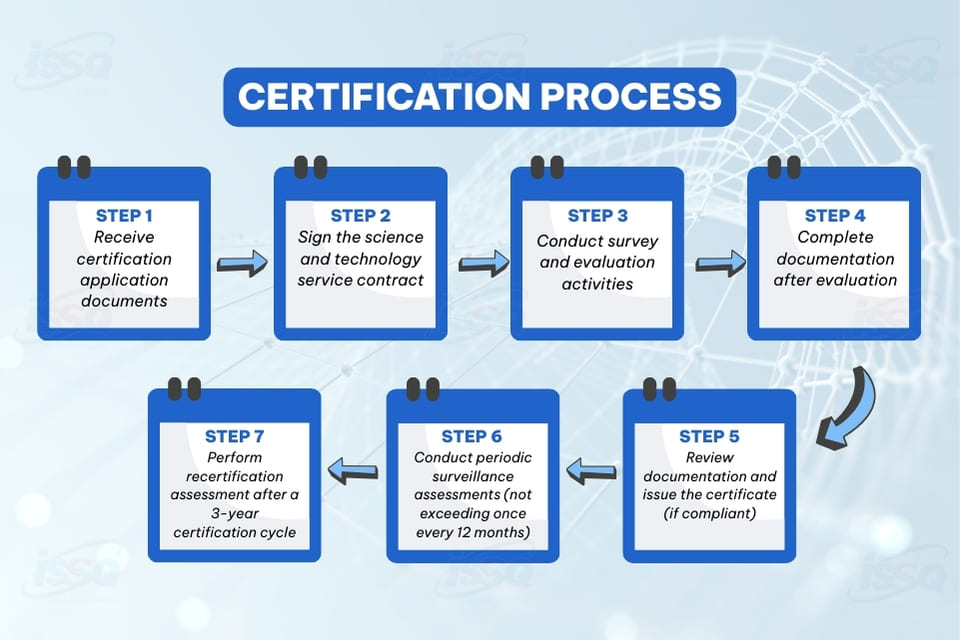
The conformity certification process for internal combustion engine lubricants under QCVN 14 generally includes the following steps:
Step 1: Receive certification registration documents
Step 2: Sign the science and technology service contract
Step 3: Conduct surveys and assessments
Step 4: Complete post-assessment documentation
Step 5: Review the dossier and issue the certificate (if compliant)
Step 6: Conduct surveillance assessments at intervals not exceeding 12 months
Step 7: Conduct recertification assessment (certificate validity: 3 years)
By obtaining conformity certification for internal combustion engine lubricants under QCVN 14, enterprises not only comply with quality management requirements but also create favorable conditions for business operations and market expansion.
Early implementation of conformity certification helps enterprises become more proactive in business operations while establishing a strong foundation for long-term market development in the lubricant industry.
From document preparation and product testing to conformity declaration, certification of internal combustion engine lubricants under QCVN 14 helps enterprises ensure products meet technical requirements before market circulation.
Preparing complete documentation from the beginning helps enterprises shorten processing time, minimize issues during assessment, and facilitate conformity declaration and CR marking for products.
For enterprises manufacturing, blending, or importing internal combustion engine lubricants, proactively implementing conformity certification not only helps improve product quality control but also enhances credibility, builds customer trust, and increases competitiveness in the market.
Companies requiring conformity certification assessment for internal combustion engine lubricants under QCVN 14 may contact the ISSQ Quality Institute via hotline: (+84) 981851111 or email: vienchatluong@issq.org.vn | tcvn@issq.org.vn for procedural support.
Published Date: April 20, 2026


