
INSTITUTE FOR STANDARD AND QUALITY DEVELOPMENT STUDIES


ISO 45001 is an occupational health and safety management system standard that provides criteria and a framework to improve workplace safety, minimize risks at work, and create safer working conditions.
ISO 45001 can be applied to all enterprises regardless of geographic location, size, type, or the products and services they provide.
Organizations and enterprises must take responsibility for minimizing risks that may harm employees and affect business operations. Therefore, ISO 45001:2018 certification was introduced to help organizations manage production activities effectively and reduce occupational accidents.
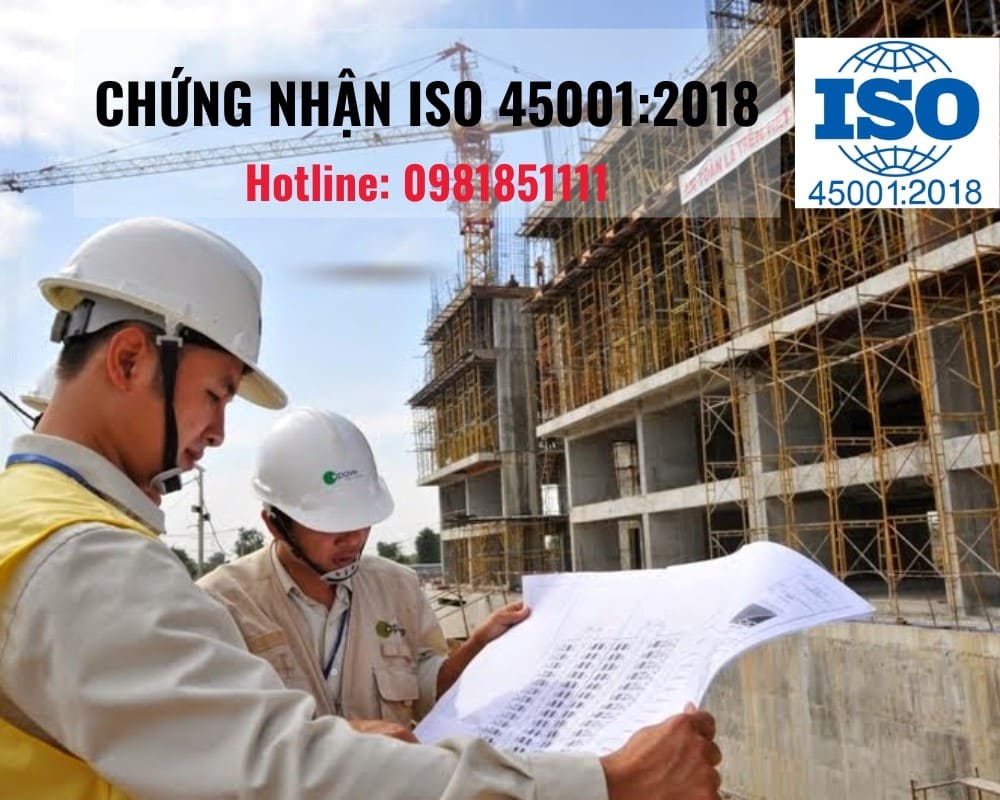
It provides a framework for risk management. The outcomes of the system help organizations implement measures to prevent work-related injuries and ill health for employees, thereby creating a safe and healthy working environment.
In addition, this certification supports organizations in meeting legal requirements and other requirements related to occupational health and safety.
The main framework of ISO 45001 is similar to ISO 9001 and follows the PDCA continuous improvement principle, which stands for Plan – Do – Check – Action (Plan – implement according to plan – check whether implementation follows the plan for evaluation and improvement).
ISO 45001:2018 sets requirements for identifying internal and external context, analyzing risks/threats, and incorporating preventive risk control measures into planning for the Occupational Health and Safety Management System.
Top management reviews internal and external context, as well as the needs and expectations of employees and relevant interested parties concerning occupational safety and prevention of work-related illnesses, in order to develop the most practical and effective OH&S management system.
Departments must identify hazards and assess risks that may lead to unsafe conditions, occupational accidents, and workplace environmental factors affecting employees’ health. Finally, it is necessary to determine which hazards require control measures to prevent their occurrence or to minimize consequences if they occur.
During hazard identification, enterprises must collect legal requirements from the government and requirements from relevant parties to determine which requirements must be complied with.
Based on hazard and risk analysis results, along with legal and other requirements, enterprises need to:
Implement and operate the Occupational Health and Safety (OH&S) management system, including the following main tasks:
Checking activities involve evaluating the effectiveness and efficiency of OH&S management system processes, including:
Review and implement improvement activities for the OH&S management system.
Business leaders must conduct management reviews of the occupational health and safety management system at appropriate intervals.
Identify areas that require improvement.
Requirements related to the “Action” stage, when maintained continuously and regularly, will help enterprises achieve continual improvement of the OH&S management system and overall performance in occupational safety and health control.
The above information outlines the four PDCA principles in ISO 45001:2018 certification. We hope this provides useful knowledge for readers.
ISSQ Quality Institute is always ready to accompany companies during the period of integration and development.
Please contact hotline: +84 981851111 or email vienchatluong@issq.org.vn | tcvn@issq.org.vn. We are honored to serve our valued customers.
Posted date: 10/11/2023


