
INSTITUTE FOR STANDARD AND QUALITY DEVELOPMENT STUDIES


HACCP is a tool used to assess hazards and establish control systems that focus on controlling significant hazards throughout the food chain, rather than relying primarily on testing the final product.
Nowadays, ensuring food hygiene and safety is no longer unfamiliar to organizations and enterprises operating in any sector of society. In the food industry, the production and distribution of food products that comply with good manufacturing practices while simultaneously conducting hazard analysis to ensure food safety can be effectively supported through HACCP certification.

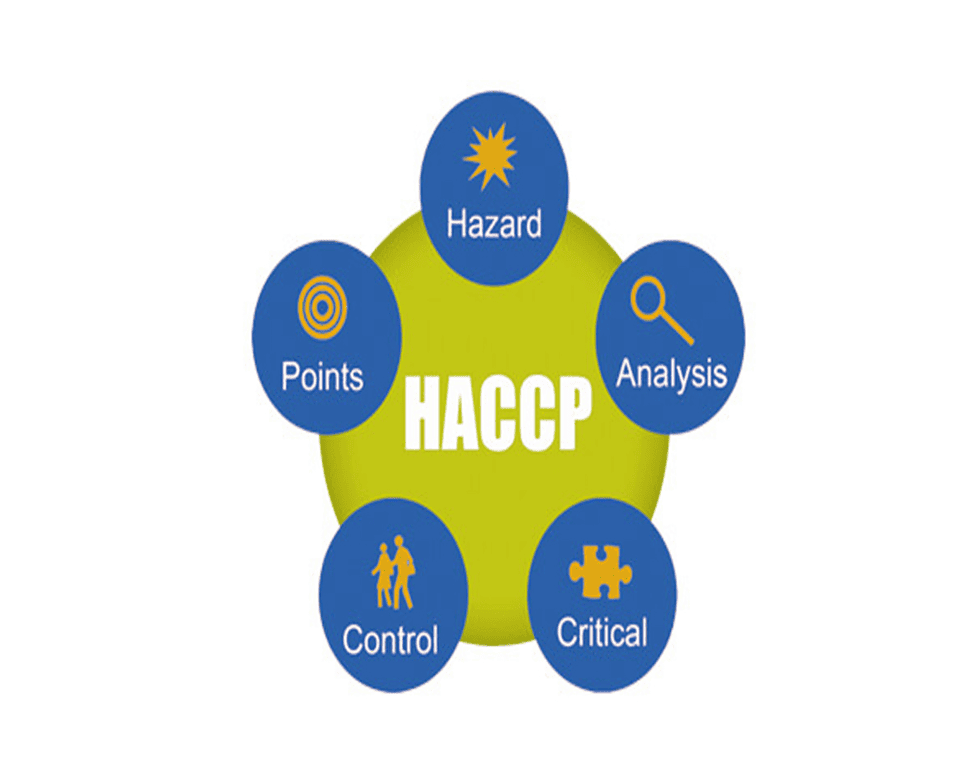
HACCP stands for Hazard Analysis and Critical Control Points, a set of principles used to establish a food safety management system. Many countries around the world have adopted and mandated HACCP implementation in food production and processing activities.
HACCP certification is a tool for assessing hazards and establishing control systems. It focuses more on prevention than on finished-product inspection.
HACCP certification applies throughout the entire food chain, from the initial stages of production to final consumption. Its implementation must be based on scientific evidence regarding hazards that may affect human health. Applying HACCP certification not only enhances food safety but also brings significant benefits by promoting international trade through increased confidence in food safety.
HACCP is a fundamental tool for planning the production of safe food when implementing ISO 22000 in organizations participating in the food chain. HACCP certification aligns with quality management systems such as the ISO 9000 family and is widely selected as a food safety management system within these frameworks.
By obtaining HACCP certification, organizations and enterprises can demonstrate their commitment to food safety to consumers.
Systematic Approach: HACCP examines and controls all stages of food production, processing, and supply operations. It helps identify hazards, establish and implement control measures, and verify system effectiveness to ensure food safety is consistently maintained.
Scientific Basis: HACCP certification is based on scientific evidence regarding food hazards, and the corresponding control measures are identified accordingly.
Specificity: Depending on the characteristics of each food product, HACCP helps identify common hazards associated with that product and establish appropriate control measures.
Preventive Nature: HACCP focuses on preventing risks rather than inspecting products after completion.
Continuous Relevance: Whenever there are changes in facilities, technology, personnel, or food safety information, the system is reviewed and adjusted to remain appropriate and effective.
Below is the HACCP certification consulting process for enterprises.
Step 1: Register for Certification Consulting
First, the enterprise registers for certification consulting with ISSQ Quality Institute and provides basic information, including company details, business sector, production methods, services, products, and related information. ISSQ Quality Institute and the enterprise will then discuss and sign a service contract.
Step 2: Preliminary Assessment
Based on the organization's current HACCP implementation status, ISSQ Quality Institute's experts conduct an initial on-site assessment of the enterprise's food safety management system.
Step 3: Documentation Review
At this stage, the documentation and records prepared for HACCP certification are reviewed. The duration of the document review depends on the size and complexity of each enterprise.
Step 4: Management System Assessment
ISSQ Quality Institute conducts an on-site assessment of the organization's HACCP implementation. The assessment reviews actual operating conditions and compares them with the submitted documents and records. Recommendations will then be provided to address any nonconformities identified within the system.
Step 5: Documentation Appraisal
Based on the corrective actions required by the certification body, ISSQ Quality Institute verifies the implementation and effectiveness of corrective measures. Subsequently, all documentation and assessment results are reviewed again to determine eligibility for HACCP certification.
Step 6: Issuance of HACCP Certificate
After the appraisal process, if the organization meets all requirements and possesses the necessary legal documentation, the HACCP certificate will be issued.
The HACCP certificate is generally valid for three (3) years from the date of issuance. Upon expiration, organizations must undergo recertification to obtain a new certificate valid for the next three-year cycle.
During the three-year certification period, organizations must undergo surveillance audits at intervals not exceeding 12 months in accordance with applicable requirements.
If an organization fails to undergo the required annual surveillance audit, the HACCP certificate may be suspended or withdrawn in accordance with regulations.
The above information regarding HACCP Certification – Hazard Analysis and Critical Control Points is shared by ISSQ Quality Institute with organizations and enterprises.
ISSQ Quality Institute is always ready to accompany your company throughout the process of integration and development.
Please contact our hotline: (+84) 981 851 111 or email vienchatluong@issq.org.vn | tcvn@issq.org.vn. We are honored to serve our valued customers.
Publication Date: October 25, 2022


