INSTITUTE FOR STANDARD AND QUALITY DEVELOPMENT STUDIES

Certification of QCVN 12-1:2011/BYT – National Technical Regulation on Hygiene and Safety for Synthetic Plastic Packaging and Utensils in Direct Contact with Food

QCVN 12-1:2011/BYT stipulates technical and management requirements for hygiene and safety of synthetic plastic packaging and utensils in direct contact with food (hereinafter referred to as plastic packaging and utensils).

Contact: +84 981 85 1111

Overview

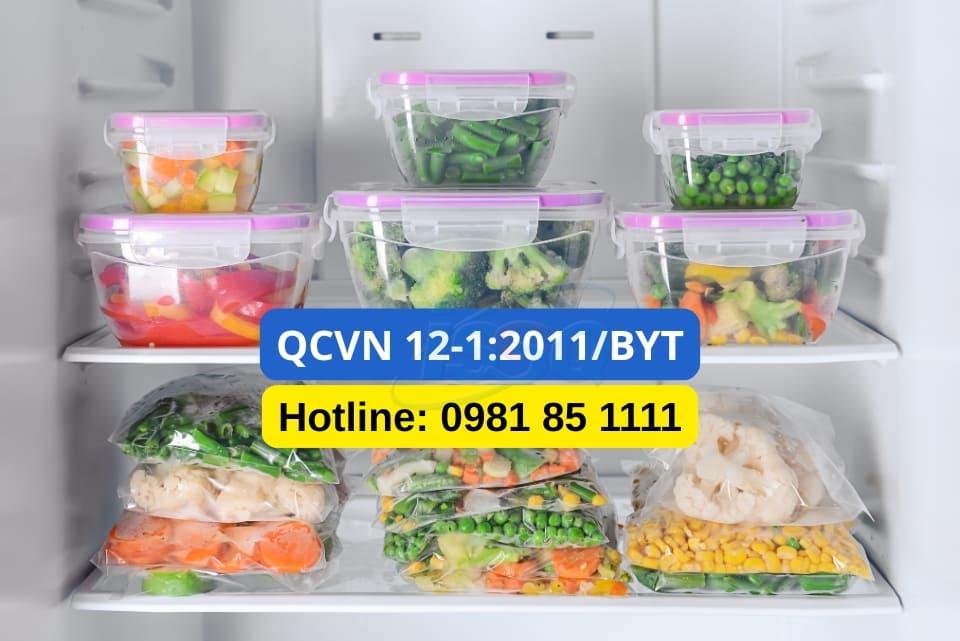
Ensuring hygiene and safety for plastic food packaging and containers is an urgent requirement. Certification of conformity for food-grade plastic packaging serves as evidence for organizations and individuals involved in manufacturing and importing to demonstrate that their products are strictly controlled, ensuring quality, safety, hygiene, and proper inspection. It helps control risks and prevents adverse impacts on consumer health.
What is the QCVN 12-1:2011/BYT Certificate?

Accordingly, all types of packaging and containers for food products, whether domestically manufactured or imported, must meet food hygiene and safety conditions. Food packaging and containers must obtain a certificate of conformity and carry out a declaration of conformity in accordance with current legal regulations.

Legal Basis for Certification of Food Plastic Packaging Conformity

  • Circular No. 34/2011/TT-BYT on National Technical Regulations on hygiene and safety for packaging and utensils in direct contact with food.
  • National Technical Regulation QCVN 12-1:2011/BYT on hygiene and safety for synthetic plastic packaging and utensils in direct contact with food issued by the Minister of Health.

QCVN 12-1:2011/BYT applies to all organizations and individuals involved in importing, manufacturing, trading, and using plastic packaging and utensils. It provides a system of technical requirements for different types of plastics, ensuring that plastic packaging products placed on the market meet regulatory requirements.

Technical Requirements for Plastic Packaging and Utensils

  • Packaging and utensils made from Phenol, Melamine, and Urea plastics
  • Packaging and utensils made from Formaldehyde plastics
  • Packaging and utensils made from Polyvinyl Chloride (PVC)
  • Packaging and utensils made from Polyethylene and Polypropylene (PE, PP)
  • Packaging and utensils made from Polystyrene (PS)
  • Packaging and utensils made from Polyvinylidene Chloride (PVDC)
  • Packaging and utensils made from Polyethylene Terephthalate (PET)
  • Packaging and utensils made from Polymethyl Methacrylate (PMMA)
  • Packaging and utensils made from Nylon (PA)
  • Packaging and utensils made from Polymethyl Pentene (PMP)
  • Packaging and utensils made from Polycarbonate (PC)
  • Packaging and utensils made from Polylactic Acid (PLA)
  • Packaging and utensils made from Polyvinyl Alcohol (PVA)

Dossier for Declaration of Conformity of Plastic Packaging

In case of declaration based on conformity certification issued by a designated certification body (third party):

The dossier includes:

  • Declaration of conformity for packaging
  • Certified copy of Business Registration Certificate (or Establishment Decision or other legal documents as prescribed)
  • Certified true copy of the Certificate of Conformity with relevant technical regulations issued by a designated certification body, together with the conformity mark sample

Why is QCVN 12-1:2011/BYT Certification Necessary?

  • Protect public health: Ensures that plastic packaging and utensils do not contain harmful substances when in contact with food.
  • Prevent food contamination: Guarantees that packaging does not release toxic compounds into food.
  • Ensure legal compliance: Helps businesses comply with food safety regulations and avoid legal violations.
  • Build customer trust: Certified products are more trusted by consumers.
  • Enhance market competitiveness: Certification differentiates products and strengthens credibility in a competitive market.

Thus, applying QCVN 12-1:2011/BYT certification is an important step to ensure the safety and quality of plastic packaging and utensils in direct contact with food.

The above provides key information about QCVN 12-1:2011/BYT certification (National Technical Regulation on hygiene and safety for synthetic plastic packaging and utensils in direct contact with food). We hope this information is useful for readers.

ISSQ Quality Institute is always ready to accompany businesses in the process of integration and development.

Please contact hotline: (+84) 981 851 111 or email: vienchatluong@issq.org.vn | tcvn@issq.org.vn — we are honored to serve you!

Published date: 22/12/2023

zalo